
Why hybrids quietly won 2026
Hybrids are the story of the 2025–26 car market. Full hybrids became the single largest powertrain category in the European Union at 34.5% of 2025 sales, overtaking diesel for the first time. In Canada, hybrids overtook ZEVs in Q3 2025 at 16.9% versus 10.4%. Plug-in hybrids were the fastest-growing drivetrain almost everywhere — up 130.9% in Australia, 43.5% in UK Q1 2026, and roughly 60% across parts of the EU.
The economics explain the surge. At 2026 fuel prices, an HEV costs roughly $8.89 per 100 miles in the US versus $13.33 for petrol and $5.40 for a home-charged EV. But hybrids need no charger, no home wiring upgrade, and no trip planning. They ranked the most reliable powertrain in JD Power's 2025 Vehicle Dependability Study at 199 problems per 100 vehicles, beating gas, diesel, and EV.
Toyota's quarter-century bet on hybrid paid off. The 2026 RAV4 went hybrid-only for its sixth generation. The Camry is now an all-hybrid lineup. Honda's CR-V Hybrid outsells its gas-only sibling. Hyundai and Kia offer hybrid or PHEV versions of every volume model. The question for 2026 buyers is no longer "should I consider a hybrid?" — it's which kind.
If you want the safest default, the Toyota RAV4 Hybrid (from $33,350) and the Toyota Camry (all-hybrid, from $30,495) are the segment's defining picks. For pure efficiency, the Toyota Prius Eco returns 57 mpg combined. If you have home charging and a short commute, a PHEV like the RAV4 Prime or Tucson PHEV can halve your fuel bill — but only if you actually plug it in.
HEV vs PHEV — the real difference
Both systems pair a gas engine with an electric motor and battery, but they behave very differently. A full hybrid (HEV) recovers energy from braking and the engine itself — there is no plug and no externally sourced electricity. A plug-in hybrid (PHEV) has a larger battery you charge from the wall, giving 20–50 miles of pure-electric driving before it reverts to HEV operation.
HEVs return 40–55 mpg combined on our master table, with 500–700 mile range per tank and an $8.89 per 100 miles US running cost. They command a typical premium of $1,500–$3,000 over a gas-only equivalent and recoup that premium in 24–36 months at average mileage. They are the efficient default for buyers who cannot or will not install home charging.
PHEVs make sense in a narrower window. If your daily drive is under the EV-only range and you can reliably charge at home, they are the closest thing to an EV without the range anxiety — 80–130 MPGe when charged, 30–50 g/km WLTP CO₂ on paper. But that is the generous case. PHEVs cost $4,000–$10,000 more than HEVs, weigh several hundred pounds more, and the battery turns into dead weight the moment you stop plugging in.
European ICCT studies found private PHEVs emit 2–3× more CO₂ than WLTP claims because many owners never plug in. The math only works if the wall plug is a daily habit.
A PHEV that is never charged is just an overweight, overpriced hybrid that drinks as much fuel as a comparable gas car. The ICCT real-world emissions data is unambiguous: buy a PHEV only if you will plug it in almost every day. If not, save the $4,000–$10,000 premium and buy an HEV instead.
Best compact hybrids for 2026
Compact hybrids are where hybrid value is at its sharpest. Starting prices begin under $26,000 in the US, fuel economy climbs to 57 mpg combined, and every mainstream automaker now offers at least one credible entry. These are the cars that will save a typical commuter $1,500–$2,500 a year in fuel compared to a gas-only equivalent.
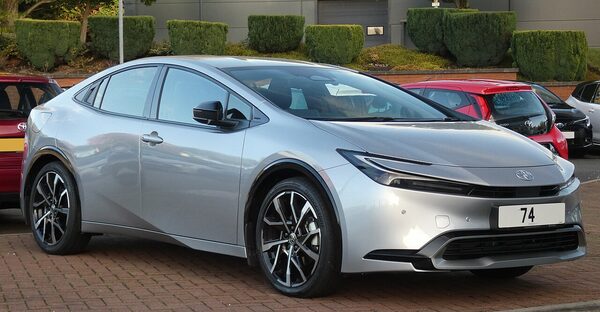
2026 Toyota Prius / Prius Eco
From ~$29,000 USD · Prius Eco 57/56/57 mpg · Prius AWD 53/54/54
The hybrid that started it all, now in its fifth generation. The Prius Eco trim returns 57 mpg combined — the highest figure for any non-plug-in car sold in the US. The AWD version still manages 54 mpg combined, and the aggressive styling of the latest generation has finally dragged the Prius out of the "appliance" corner of the market.
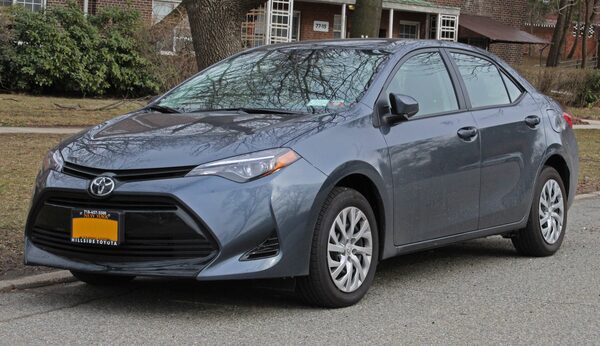
2026 Toyota Corolla Hybrid
Corolla gas from $24,100 · Corolla Hybrid from $25,970 (incl. dest.)
The 2026 Corolla Hybrid is the cheapest way into Toyota's proven hybrid system. 138 hp, up to 50 mpg combined, and the only compact hybrid sedan on the market available with all-wheel drive. TSS 3.0 active safety is standard, blind-spot monitoring is now standard across the lineup, and the hybrid premium over the gas model is under $2,000.
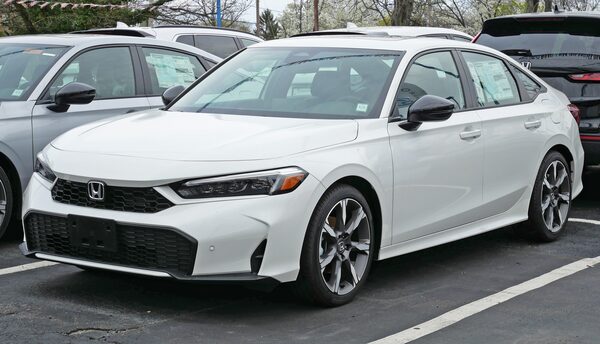
2026 Honda Civic Hybrid
Civic LX $25,890 · Sport Hybrid sedan $30,590 · Type R $46,000
The 11-time KBB Best Buy Compact Car winner. The Sport Hybrid uses Honda's two-motor 2.0L system for 200 hp and 49 mpg combined — Si-style acceleration (0–60 in about 6.1 seconds) paired with hybrid frugality. Honda Sensing is standard, a 9-inch touchscreen comes on mid-trims, and Google Built-in arrives on the Sport Touring.
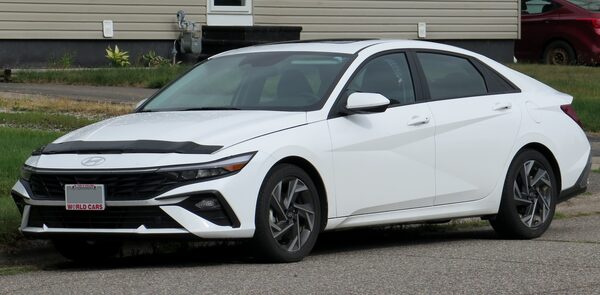
2026 Hyundai Elantra Hybrid Blue
From ~$27,000 USD · 10-yr/100k powertrain warranty
The Elantra Hybrid Blue is the second-most-efficient non-plug-in sold in the US at 53/58/54 mpg. It undercuts the Civic Hybrid on price, includes Hyundai's industry-leading 10-year/100,000-mile powertrain warranty, and carries a genuinely distinctive design in a segment full of conservative sedans.
Honorable mention: Kia Niro Hybrid
The Kia Niro Hybrid delivers 53/54/53 mpg in a crossover-ish wagon body that splits the difference between hatchback and compact SUV. Dedicated-hybrid platform, 10-year/100,000-mile warranty, and a cabin that feels a class above the price — a strong choice for buyers who want hybrid efficiency with slightly more cargo room than a sedan.
Best hybrid sedans for 2026
The mid-size sedan category is now effectively a hybrid category. Toyota made the Camry hybrid-only for 2025 and Honda sells the Accord in hybrid volume that exceeds its gas sibling. The result is a rare moment where the best-selling models in the segment are also the most efficient.
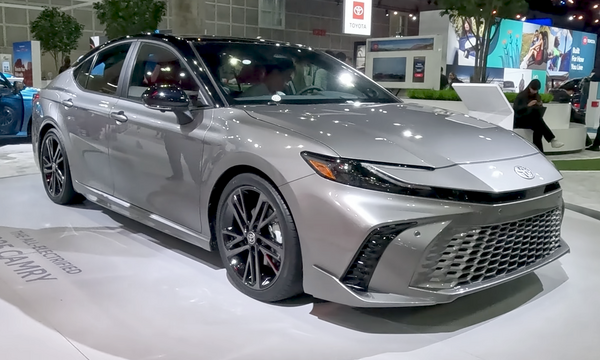
2026 Toyota Camry (all-hybrid)
LE from $30,495 USD · AWD +$1,525 · Up to 52/49/51 mpg
The Camry has gone all-hybrid for the ninth generation and the numbers speak for themselves: 225 hp FWD, 232 hp AWD, and up to 52 mpg city — roughly 10 mpg better than the 2024 hybrid. Twin 12.3-inch displays are standard, Proactive Drive Assist is included, and five-year total cost of ownership runs $36,000–$50,000, which is remarkable for a midsize sedan.
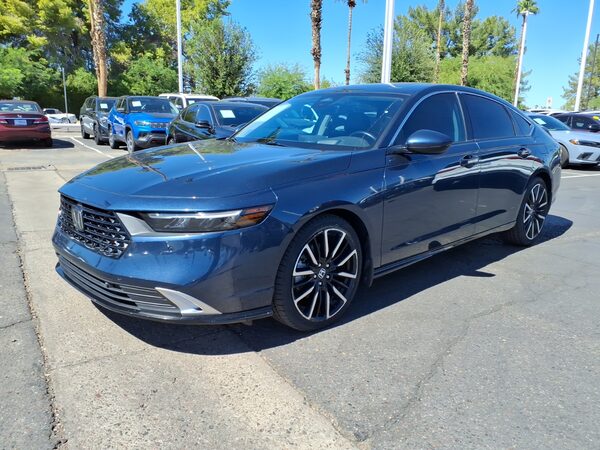
2026 Honda Accord Hybrid
LX $28,395 · Sport Hybrid $33,795 · Touring Hybrid ~$40,000
The Accord Hybrid pairs the two-motor 2.0L hybrid system with Honda's best-ever interior. 204 hp, 51/44/48 mpg, and a refinement advantage over the Camry that buyers notice on long drives. New for 2026: a larger 9-inch touchscreen and wireless CarPlay and Android Auto standard across the range.
Hyundai Sonata Hybrid and Toyota Crown
The Hyundai Sonata Hybrid Blue returns 50/54/51 mpg and is typically priced several thousand dollars under the Camry and Accord — the value play in the segment. The Toyota Crown Hybrid takes the opposite tack: a raised, distinctive "sedan-crossover" silhouette with the standard 236-hp hybrid or the 340-hp Hybrid MAX, the latter delivering genuine sport-sedan acceleration with mid-30s mpg.
Best hybrid and PHEV SUVs for 2026
Hybrid SUVs are the volume story of 2026. Every major compact and mid-size SUV now offers a hybrid option, and in many cases — Toyota RAV4, Honda CR-V, Toyota Sienna — the hybrid outsells the gas version. PHEVs sit one tier higher, letting short-commute households effectively drive electric six days a week while keeping road-trip range for the seventh.
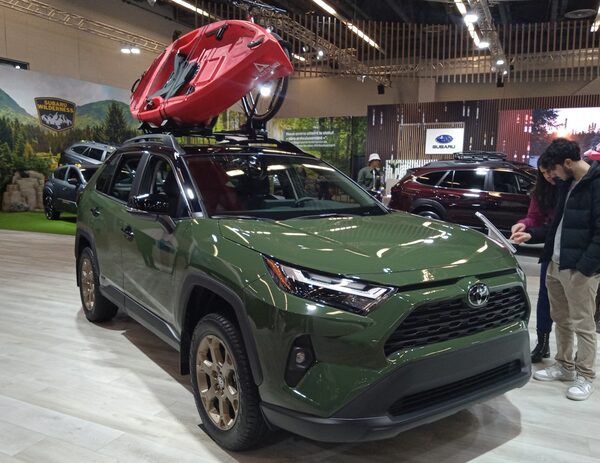
2026 Toyota RAV4 Hybrid and RAV4 Prime (PHEV)
Hybrid from $33,350 USD · PHEV adds 52 mi EV range · 324 hp PHEV
The all-new sixth-generation RAV4 goes hybrid-only. The standard HEV delivers 226 hp FWD or 236 hp AWD and up to 47/40/43 mpg. The PHEV (RAV4 Prime lineage) adds 324 hp, 52 miles of pure-electric range, and a 5.4-second 0–60 time. The Arene software platform, 12.9-inch touchscreen, and TSS 4.0 round out the redesign.
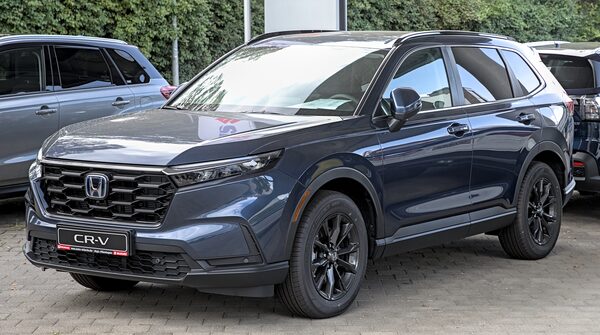
2026 Honda CR-V Hybrid
LX $30,920 · Sport Hybrid $35,630 · Sport Touring Hybrid $42,550
The two-motor hybrid produces 204 hp and roughly 40/34/37 mpg — slightly behind the RAV4 on paper but ahead on ride quality and interior polish. Honda Sensing is standard across the range, and Google Built-in arrives on the Sport Touring trim for 2026.
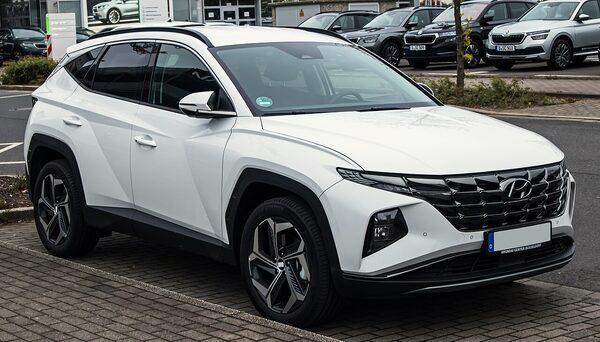
2026 Hyundai Tucson Hybrid and PHEV
Gas from $29,450 · Hybrid $33,100 · PHEV with 32 mi EV range
Every powertrain in one body: 187 hp gas, 231 hp hybrid, 268 hp PHEV with 32 miles of EV range. The 12.3-inch curved display and hands-on highway driving assist (HDA2) are standard on mid-trims, and the 10-year/100,000-mile powertrain warranty remains the longest in the segment.
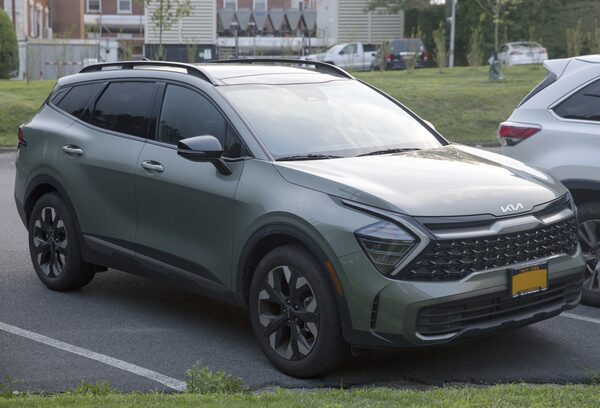
2026 Kia Sportage Hybrid and PHEV
Gas from ~$28,000 · Hybrid $31,000 · PHEV $40,000
Kia's sibling to the Tucson uses the same hybrid and PHEV hardware with bolder styling and slightly sharper pricing. The Sportage Hybrid FWD earns up to 43 mpg combined (the best in the Hyundai-Kia compact SUV lineup), while the PHEV delivers 261 hp and 34 miles of EV range.
Larger hybrid SUVs: Highlander, Sienna, Santa Fe, Sorento PHEV
The Toyota Grand Highlander Hybrid (Hybrid MAX from ~$56,000) uses the i-FORCE MAX powertrain for 362 hp and 400 lb-ft while returning roughly 36 mpg combined — eight-seat capability without the usual fuel-economy penalty. The Hyundai Palisade Hybrid (from $38,000+) earned both the KBB Best Midsize SUV award and a Car and Driver 10Best nod for 2026. The Hyundai Santa Fe Hybrid sits a half-size below in a boxier, more utilitarian body, and the Kia Sorento PHEV offers three-row practicality with roughly 30 miles of EV range.
The Ford Escape PHEV returns a 37-mile EV range — the deepest pure-electric buffer of any mainstream compact PHEV — at a price that typically undercuts the Tucson and Sportage PHEVs by several thousand dollars. It is the pick for buyers who specifically want maximum EV miles on the cheapest possible PHEV sticker.
Best hybrid minivans, wagons, and trucks
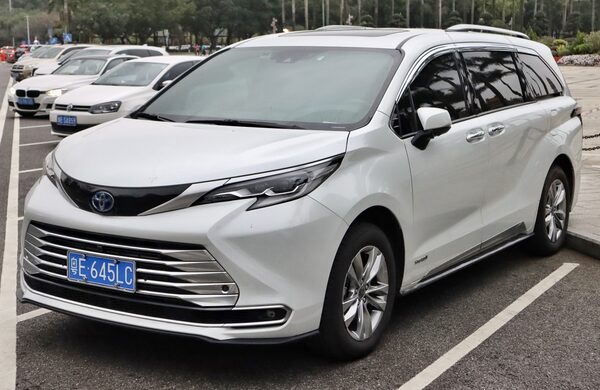
2026 Toyota Sienna (hybrid-only)
LE from $41,615 USD · Platinum ~$63,000 · AWD optional
The Sienna is the only hybrid-only minivan in the US and returns a class-leading 36 mpg combined in a seven- or eight-seat body. AWD is optional, five-year resale leads the segment, and Car and Driver awarded the Sienna a 10Best honor for 2026.
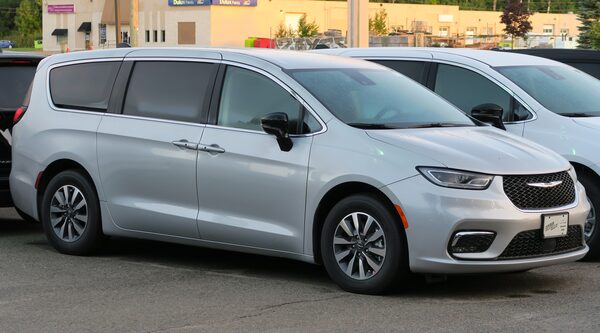
2026 Chrysler Pacifica Hybrid (PHEV)
Select $44,445–$56,095 · 32 mi EV range
The Pacifica Hybrid remains the only plug-in hybrid minivan on sale. A 32-mile EV range covers most school-run and grocery-trip duty cycles on electricity alone, and the Pacifica retains its class-leading Stow 'n Go seating in every trim except the hybrid's second row — a trade-off for the battery pack under the floor.
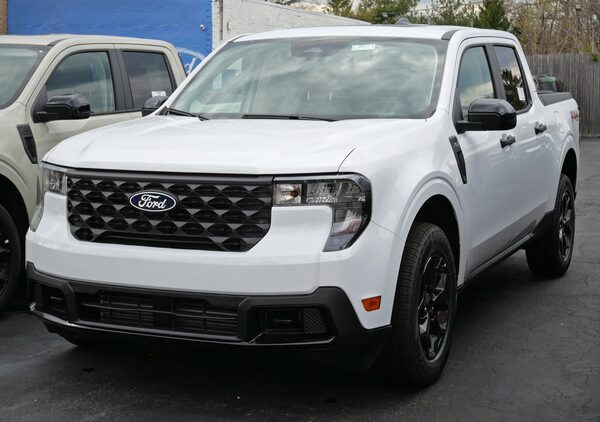
2026 Ford Maverick Hybrid
From sub-$30,000 USD · Hybrid standard on lower trims · 4,000 lb tow
The Maverick made hybrid standard on lower trims — the first US pickup to do so. The result is a real truck that delivers roughly 40 mpg combined in hybrid FWD trim, tows 4,000 pounds, and undercuts most compact SUVs on price. Named KBB Best Compact Truck 2026 and a Car and Driver 10Best for the second year running.
Ford F-150 PowerBoost: the hybrid full-size
The 2026 Ford F-150 PowerBoost Hybrid delivers 430 hp, 570 lb-ft of torque, and roughly 24 mpg combined — remarkable figures for a full-size pickup. It also doubles as a jobsite generator via Pro Power Onboard (up to 7.2 kW). The PowerBoost is a mid-$50,000s proposition in most trims, which is steep, but no other full-size truck matches its efficiency or onboard power.
Premium PHEVs: BMW, Volvo, Mercedes
Premium PHEVs are where plug-in hybrid value is most contested. The drivetrain exists largely to satisfy European company-car tax rules, but for buyers who can charge daily, the current generation finally delivers 40–60 miles of pure-electric range — enough to run a full workday on electricity and reserve the engine for highway duty.
BMW offers PHEV versions of the 3 Series, 5 Series, X3, and X5, typically pairing a 3.0L inline-six or 2.0L turbo four with an electric motor for 40–60 miles of EV range. The iX3 (Neue Klasse) is fully electric, but mild-hybrid and PHEV options remain across the BMW lineup into 2026. The 330e and X5 xDrive50e are the volume picks.
Volvo remains the Western brand most committed to plug-in hybrid. Nearly every Volvo SUV offers a T8 Recharge PHEV trim — the XC60 and XC90 T8 deliver roughly 40 miles of EV range and 455 hp. The EX90 covered in our SUV guide is pure electric, but the XC90 PHEV continues alongside it as the company's plug-in flagship.
Mercedes-Benz fields PHEV versions of the C-Class, E-Class, GLC, and GLE. The GLE 450e plug-in combines a 3.0L inline-six with a 23.3 kWh battery for up to 51 miles of EPA range — the deepest EV buffer of any premium SUV PHEV sold in the US — at a price that typically lands in the low $70,000s.
A $75,000 GLE 450e costs roughly $15,000 more than a comparable gas GLE. That premium only pays back if you charge daily. If you cannot, the same buyer is almost always better served by a Lexus RX 500h hybrid or a full EV like the Volvo EX90 — one cheaper to run without charging, the other cheaper to run with it.
Quick comparison table
A single-view snapshot of starting MSRP, power, efficiency or EV range, and recognition across every hybrid tier covered in this guide. Scroll horizontally on mobile to see the full table.
| Model | Type | Starting MSRP | Max hp | Efficiency / EV range | Recognition |
|---|---|---|---|---|---|
| Toyota Prius Eco | HEV | ~$29,000 | 196 | 57 mpg | Most efficient non-plug-in |
| Toyota Corolla Hybrid | HEV | $25,970 | 138 | 50 mpg | Only AWD compact hybrid sedan |
| Honda Civic Hybrid | HEV | $30,590 | 200 | 49 mpg | KBB Best Buy · C&D 10Best |
| Hyundai Elantra Hybrid Blue | HEV | ~$27,000 | 139 | 54 mpg | 10yr warranty |
| Kia Niro Hybrid | HEV | ~$28,000 | 139 | 53 mpg | Dedicated hybrid platform |
| Toyota Camry (all-hybrid) | HEV | $30,495 | 232 | 51 mpg | KBB Best Buy Midsize 2026 |
| Honda Accord Hybrid | HEV | $33,795 | 204 | 48 mpg | C&D 10Best 2026 |
| Hyundai Sonata Hybrid Blue | HEV | ~$30,000 | 192 | 51 mpg | Value sedan |
| Toyota RAV4 Hybrid | HEV | $33,350 | 236 | 47 mpg | KBB Best Buy 2026 |
| Toyota RAV4 Prime | PHEV | ~$45,000 | 324 | 52 mi EV | Fastest RAV4 ever |
| Honda CR-V Hybrid | HEV | $35,630 | 204 | 37 mpg | C&D 10Best 2026 |
| Hyundai Tucson PHEV | PHEV | ~$40,000 | 268 | 32 mi EV | IIHS TSP+ |
| Kia Sportage Hybrid | HEV | $31,000 | 227 | 43 mpg | Best mpg in K/H lineup |
| Kia Sorento PHEV | PHEV | ~$50,000 | 261 | ~30 mi EV | 3-row PHEV |
| Ford Escape PHEV | PHEV | ~$42,000 | 210 | 37 mi EV | Deepest mainstream EV buffer |
| Hyundai Palisade Hybrid | HEV | $38,000+ | ~260 | ~30 mpg | KBB + C&D 10Best |
| Toyota Grand Highlander Hybrid | HEV | $56,000 | 362 | 36 mpg | i-FORCE MAX |
| Toyota Sienna | HEV | $41,615 | 245 | 36 mpg | C&D 10Best · hybrid-only |
| Chrysler Pacifica Hybrid | PHEV | $44,445 | 260 | 32 mi EV | Only PHEV minivan |
| Ford Maverick Hybrid | HEV | sub-$30,000 | 191 | ~40 mpg | KBB + C&D 10Best |
| Ford F-150 PowerBoost | HEV | ~$55,000 | 430 | 24 mpg | Hybrid full-size pickup |
| Mercedes GLE 450e | PHEV | ~$72,000 | 381 | 51 mi EV | Deepest premium EV buffer |
| Volvo XC90 T8 Recharge | PHEV | ~$73,000 | 455 | ~35 mi EV | Premium 3-row PHEV |
| BMW X5 xDrive50e | PHEV | ~$73,000 | 483 | ~40 mi EV | Premium SUV PHEV benchmark |
How to choose: HEV, PHEV, or neither
The hybrid decision collapses into three questions. Answer them honestly and the right drivetrain is usually obvious.
1. Can you plug in at home every night?
If yes, a PHEV is a plausible option — you will drive on electricity for most daily miles and burn gas only on road trips. If no, skip PHEV entirely. The $4,000–$10,000 premium is wasted when the battery never leaves the same 20% charge state, and ICCT real-world data shows unplugged private PHEVs emit 2–3× more CO₂ than the WLTP figures on the sticker.
2. How far is your typical daily drive?
Under 30 miles a day with home charging pushes you toward a PHEV or a full EV — a PHEV with 30+ miles of EV range will handle most days without touching fuel. Between 30 and 80 miles makes a PHEV less compelling (the battery runs out mid-day) and points to an HEV. Above 80 miles regularly, an HEV is the strongest fit — and a highway-focused EV may actually cost less per mile than either.
3. How long will you keep the car?
Hybrids retain resale value notably better than gas-only equivalents — Toyota hybrids currently lead the segment on iSeeCars depreciation data. PHEVs depreciate roughly in line with their gas siblings; buyers are skeptical of the battery. If you plan to keep the car 8+ years, the hybrid premium is easy to justify on residual value alone. If you trade every three years, an HEV still makes sense, but a PHEV rarely does.
The total cost picture
Over 15,000 miles a year in the US, an HEV saves roughly $667 per year in fuel versus a gas-only equivalent. Over five years that's $3,335 — more than enough to recoup a typical $1,500–$3,000 hybrid premium. A PHEV charged daily can save another $400–$600 a year on top of that. A PHEV never plugged in saves essentially nothing while costing thousands more to buy. The delta comes entirely down to behavior.
- Hybrid (HEV) — default choice for buyers without home charging or with mixed daily mileage. 40–55 mpg, no range anxiety, strong resale.
- Plug-in hybrid (PHEV) — only worth it if you charge almost every day. 20–50 mi EV range, 80–130 MPGe when charged, near-gas consumption when unplugged.
- Gas (ICE) — still cheapest to buy, but highest cost per mile at 2026 fuel prices. Best for rural or very low-mileage buyers.
- Battery electric (BEV) — lowest running cost if you can charge at home. Better than a PHEV on efficiency and maintenance, but only if charging logistics work.
Frequently asked questions
For most buyers, the 2026 Toyota RAV4 Hybrid ($33,350) and the all-hybrid Toyota Camry ($30,495) are the defining choices. The RAV4 earned KBB Best Buy Compact SUV 2026 with 47 mpg combined; the Camry earned KBB Best Buy Midsize Car with up to 52/49/51 mpg and optional AWD. For pure efficiency, the Toyota Prius Eco at 57 mpg combined is still the most efficient non-plug-in car sold in the US.
Only if you will plug it in almost every day. European ICCT studies found private PHEVs emit 2–3× more CO₂ than WLTP claims because many owners never plug in. A PHEV that is never charged is simply a heavier, more expensive HEV that drinks nearly as much fuel as a gas car. If you have home charging and commute under the EV-only range, a PHEV can halve your fuel bill. If not, save the $4,000–$10,000 premium and buy an HEV.
At 2026 fuel prices, an HEV costs roughly $8.89 per 100 miles in the US versus $13.33 for petrol. Over 15,000 miles a year that is about $667 in annual fuel savings. The typical hybrid premium is $1,500–$3,000 over a gas equivalent, so most buyers recoup the upfront cost in 24–36 months. Hybrids also ranked as the most reliable powertrain in JD Power's 2025 Vehicle Dependability Study at 199 problems per 100 vehicles, and they retain resale value better than gas-only models.
Among mainstream models, the Toyota RAV4 Prime PHEV leads at 52 miles of EV range, followed by the Mercedes-Benz GLE 450e at 51 miles EPA — the deepest buffer in the premium segment. The Ford Escape PHEV (37 mi), Kia Sportage PHEV (34 mi), Hyundai Tucson PHEV (32 mi), and Chrysler Pacifica Hybrid (32 mi) cluster in the 30s. All figures are EPA estimates; real-world EV range typically runs 10–20% lower in cold weather or at highway speeds.
Modern hybrid traction batteries routinely outlast the rest of the vehicle. Toyota covers hybrid battery packs for 10 years or 150,000 miles on 2020+ models, and real-world fleet data from Toyota and Hyundai shows most hybrid batteries retain more than 85% of original capacity after 150,000–200,000 miles. Replacement cost, if it ever becomes necessary, typically runs $2,000–$4,500 — meaningfully less than a transmission rebuild on many gas cars.
Mainstream hybrid SUVs tow 1,500–3,500 pounds — enough for small trailers and jet skis but short of what a gas V6 SUV will pull. Hybrid pickups are different: the Ford F-150 PowerBoost tows up to 12,700 pounds while returning 24 mpg combined, and the Toyota Tacoma i-FORCE MAX hybrid tows 6,500 pounds at 326 hp and 465 lb-ft. For genuinely heavy towing, a hybrid full-size truck now rivals a gas V8 on capability with meaningfully better fuel economy.
Toyota hybrids dominate the resale table. The Toyota Sienna (hybrid-only) retains the best five-year resale in the minivan segment per Car and Driver. The Toyota RAV4 Hybrid and Camry consistently top iSeeCars depreciation data at roughly 40–45% five-year depreciation, versus a 55–60% industry average. Hyundai and Kia hybrids trail Toyota slightly but still outperform gas-only equivalents in their segments.
Hybrids became the best-value powertrain in 2026 because the math finally converged: lower fuel cost, proven 25-year reliability, no charging infrastructure required, and strong resale on top. Pick an HEV unless you can genuinely plug in every day — in which case a PHEV with 30+ miles of EV range can halve your fuel bill. Either way, shop out-the-door transaction prices and get a pre-approved loan before walking into the dealer.