
The 2026 SUV market in one minute
SUVs and crossovers remain the dominant vehicle category across every major English-speaking market. They account for 61% of Australian new-car sales, more than half of US registrations, and the clear majority of UK family-car purchases. Three forces are reshaping the segment in 2026.
First, hybrids quietly won the year. Toyota made the RAV4 hybrid-only for its sixth generation. Honda's CR-V Hybrid now outsells its gas-only variant. Hyundai offers every Tucson and Santa Fe trim with a hybrid option. The message from buyers is clear: 40+ mpg without plugging in is worth paying a small premium for.
Second, electric SUV choice exploded. The Chevrolet Equinox EV starts at under $37,000 with 319 miles of range. The Kia EV9 and Hyundai Ioniq 9 deliver three-row electric family transport for $55,000–$65,000. The Lucid Gravity pushed the luxury benchmark to 450 miles of EPA range. There is now a credible electric option at virtually every price point above $35,000.
Third, prices are up. The average US new-vehicle transaction price crossed $50,000 for the first time in history in September 2025, and SUVs lead that inflation. But manufacturer discounts on slow-moving EV inventory have created meaningful negotiation room — Hyundai cut Ioniq 5 MSRPs by up to $9,800, and several brands are offering $5,000–$10,000 off sticker on 2026 electric SUVs.
If you want the safest default choice, the 2026 Toyota RAV4 Hybrid ($33,350) is hard to beat for mainstream buyers. If you're ready to go electric, the Chevrolet Equinox EV ($36,795) offers 319 miles of range at a mainstream price. For three-row families, the Hyundai Palisade Hybrid and Kia EV9 top their respective categories.
Best compact SUVs for 2026
Compact SUVs are the volume center of the market — the category where the most intense competition plays out and where most buyers actually shop. They seat five adults, deliver 30–40 mpg when hybridized, tow 1,500–3,500 pounds, and start in the $28,000–$35,000 range across all four English-speaking markets.
For 2026, three redesigned models lead the segment: the hybrid-only Toyota RAV4, the refreshed Honda CR-V, and the Hyundai Tucson, which now offers every powertrain from 187-hp gas to 268-hp plug-in hybrid.
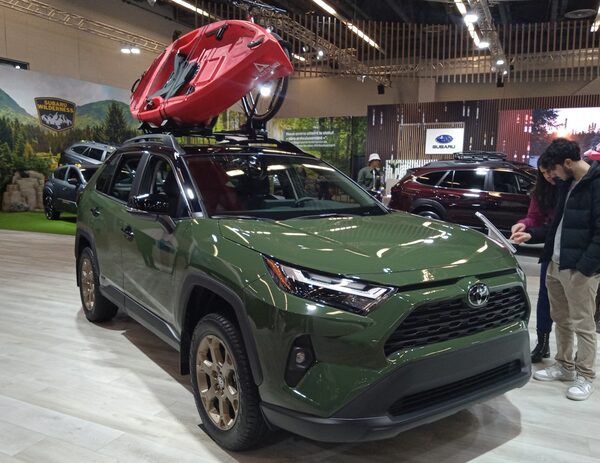
2026 Toyota RAV4 (6th generation)
From $33,350 USD · Hybrid-only · PHEV available
The all-new sixth-generation RAV4 goes hybrid-only and introduces Toyota's Arene software platform. The standard hybrid delivers 226–236 hp and 47 mpg combined. A new PHEV option adds a 52-mile pure-electric range and 5.4-second 0–60 time. This is the safest mainstream choice in the segment.
Who should buy it
Mainstream families who want class-leading fuel economy, all-wheel drive, and Toyota's reputation for long-term reliability. The RAV4 is the segment's default reasonable answer — you will rarely regret buying one.
- Class-leading 47 mpg combined
- Strong resale value history
- New Arene software platform
- PHEV option with 52 mi EV range
- Ride firmer than CR-V
- Interior quality trails Hyundai
- Hybrid-only raises entry price
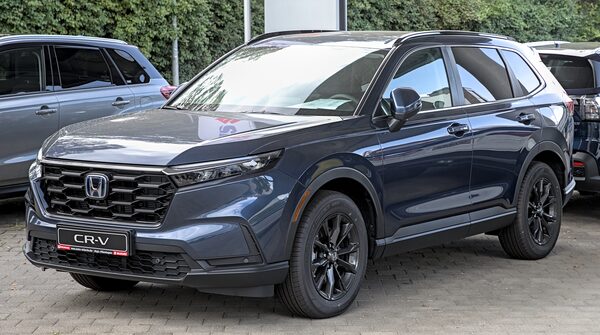
2026 Honda CR-V / CR-V Hybrid
LX $30,920 · Sport Hybrid $35,630 · Sport Touring $42,550
The long-running class benchmark. The 1.5T gas engine makes 190 hp, while the two-motor hybrid produces 204 hp with approximately 37 mpg combined. Google Built-in arrives on upper trims for 2026, and Honda Sensing driver-assistance is standard across the lineup.
Who should buy it
Buyers who value refinement, interior quality, and Honda's reputation for durability over outright efficiency. The CR-V is slightly less frugal than the RAV4 but rides better and feels more premium inside.
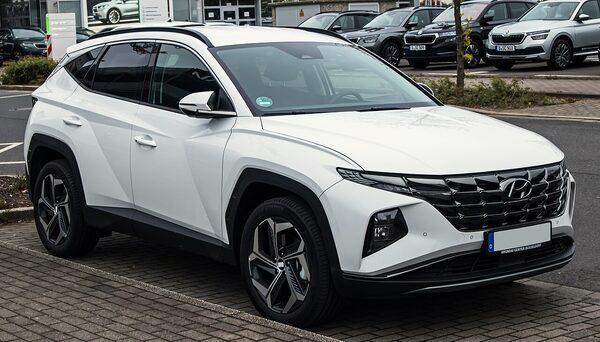
2026 Hyundai Tucson / Hybrid / PHEV
From $29,450 · Hybrid $33,100 · PHEV with 32 mi EV range
Three distinct powertrains in one shell: 187 hp gas, 231 hp hybrid, and 268 hp PHEV. The 12.3-inch curved display and hands-on highway driving assist are now standard on mid-trims, all backed by Hyundai's industry-leading 10-year/100,000-mile powertrain warranty.
Who should buy it
Value-driven buyers who want every powertrain option and the longest warranty in the segment. The Tucson also has the boldest design — the "parametric jewel" grille makes it stand out in a sea of conservative compact SUVs.
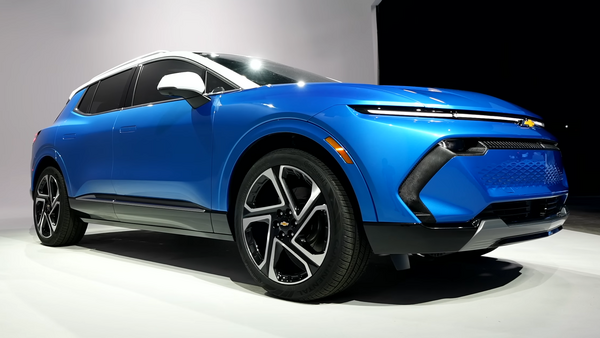
2026 Chevrolet Equinox EV
LT1 $36,795 · RS $45,895 · 85 kWh battery
The mainstream American electric answer. 220 hp FWD or 300 hp AWD, with 319 miles of EPA range on the front-wheel-drive configuration and 103 MPGe combined. Super Cruise hands-free highway driving is available on most trims.
Who should buy it
Home-charging households ready for an EV but not willing to pay Tesla or Hyundai prices. The Equinox EV delivers more than 300 miles of real-world range at what amounts to Civic-money before incentives.
Honorable mentions in the compact segment
The Mazda CX-50 Hybrid (from ~$36,000) pairs a Toyota-sourced hybrid system with Mazda's driver-focused chassis tuning and standard all-wheel drive. The Subaru Forester (from $31,445) remains the go-to for active, outdoor-oriented buyers — symmetrical AWD is standard across every trim, and the new Wilderness trim adds genuine off-road capability. The Kia Sportage Hybrid (from ~$31,000) delivers up to 43 mpg combined and shares its powertrain with the Tucson Hybrid under Hyundai Group.
Best mid-size SUVs for 2026
Mid-size SUVs trade compact efficiency for real space — six to eight seats, 3,500–5,000 pounds of towing capacity, and enough room for a genuine third row. Fuel economy typically runs 22–28 mpg for gas powertrains, though strong hybrid and long-range electric options now push well beyond that baseline.
This is the category where 2026 electric competition is fiercest. The Kia EV9 and Hyundai Ioniq 9 arrived as credible three-row electric family vehicles, while Toyota's Grand Highlander Hybrid MAX proved you can have 362 horsepower and 36 mpg combined in the same vehicle.
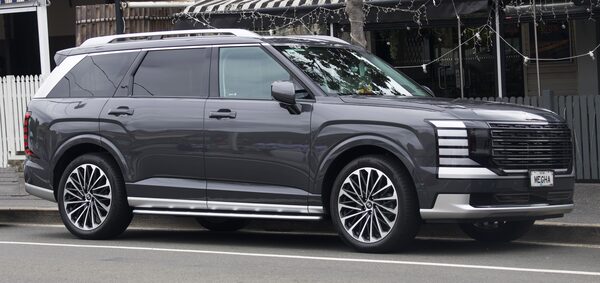
2026 Hyundai Palisade Hybrid
From $38,000+ USD · 8 passengers · Class-leading warranty
A roomy eight-seater that earned both the KBB Best Midsize SUV award and a Car and Driver 10Best nod for 2026. The standard hybrid powertrain, spacious third row, and near-luxury interior come in at roughly half the price of a comparable Lexus or Acura.
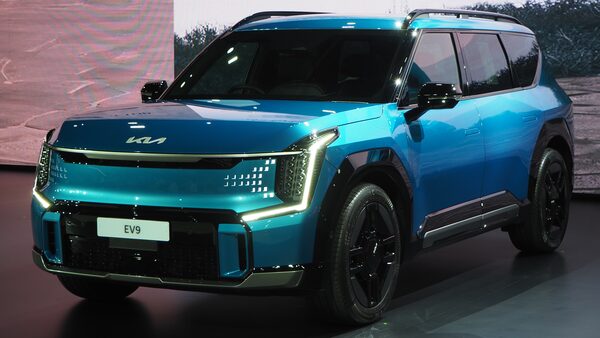
2026 Kia EV9
Light RWD ~$54,900 · GT-Line AWD ~$73,900
The breakout three-row electric of this generation. Up to 99.8 kWh of battery, 201–379 hp depending on trim, and up to 305 miles of EPA range. The 800V electrical architecture enables 230 kW DC fast charging — 10–80% in under 25 minutes.
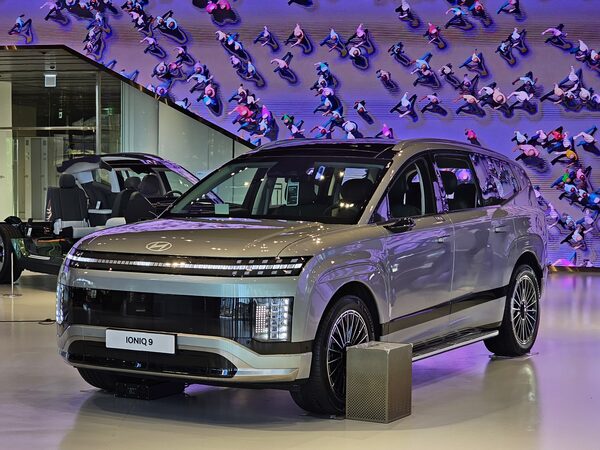
2026 Hyundai Ioniq 9
From $60,555 USD · S RWD to Performance AWD
Hyundai's all-new three-row electric flagship, assembled in Georgia. The 110.3 kWh battery delivers up to 335 miles of EPA range in RWD configuration. The Performance AWD trim hits 0–60 in 4.9 seconds and includes seven USB-C ports plus HDA2 highway assist.
Best gas-powered mid-size SUV: Toyota Grand Highlander
The 2026 Toyota Grand Highlander (from ~$42,500; Hybrid MAX from $56,000) answers buyers who outgrew the standard Highlander. The Hybrid MAX trim delivers 362 hp and 400 lb-ft of torque with combined fuel economy of roughly 36 mpg — genuinely impressive numbers for a seven- or eight-seat SUV rated to tow 5,000 pounds.
The gap between perceived range anxiety and real-world need is stark — the average American drives 37 miles a day, and even mid-range 2026 electric SUVs easily cover a full week on a single charge.
Best full-size SUVs for 2026
Full-size SUVs trade refinement and fuel economy for serious capability. Seven to nine passengers, 8,000–13,000 pounds of towing, body-on-frame construction, and 15–20 mpg fuel economy that's realistic in daily use. Purchase prices run from $60,000 to well past $150,000, and this is one of the last categories where diesel still makes economic sense.
Chevrolet Tahoe: The diesel sleeper
GM's full-size staple offers three distinct powertrains: 355-hp 5.3L V8, 420-hp 6.2L V8, or a 305-hp 3.0L Duramax diesel that achieves up to 23 mpg on the highway — the best-in-class figure for a body-on-frame eight-seat SUV. Super Cruise hands-free highway driving is available, and the Tahoe starts at $62,995 for the LS trim. The High Country tops out near $83,000.
Ford Explorer: The refreshed all-rounder
Ford's three-row family SUV gets a new rugged-oriented Tremor trim for 2026, joining the existing Active ($38,465) and ST ($55,500) grades. Choice of 300-hp 2.3L EcoBoost four-cylinder or 400-hp 3.0L EcoBoost V6 in ST trim. BlueCruise now includes automatic lane change on highways — a Level 2+ system that rivals GM's Super Cruise for highway confidence.
Toyota Sequoia Hybrid: The efficiency outlier
The Sequoia uses Toyota's i-FORCE MAX hybrid powertrain to produce 437 hp and 583 lb-ft of torque while achieving around 21 mpg combined — the highest figure in the full-size body-on-frame segment. Starting around $65,000 and capable of towing 9,520 pounds, it's the clear pick for families who need real capability but refuse to accept 15 mpg as normal.
Best premium electric SUVs
Premium electric SUVs are the most aggressively competitive segment of 2026. Eight-hundred-volt architectures, 400+ mile ranges, and hands-free highway driving are now baseline expectations rather than premium upgrades. Purchase prices run $75,000 to $200,000+, but fuel and maintenance savings over five years meaningfully reshape the cost comparison against gas luxury SUVs.
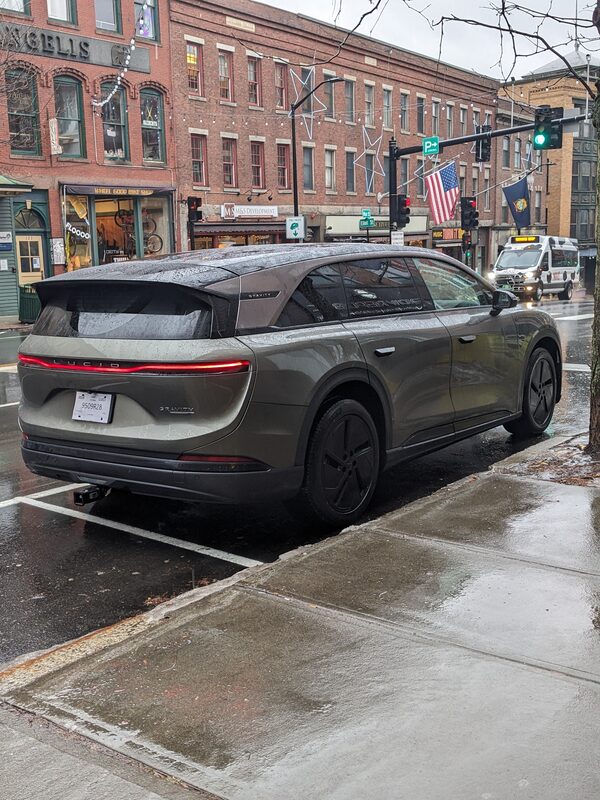
2026 Lucid Gravity
Touring $79,900 · Grand Touring $94,900 · 112 kWh
Lucid's first SUV and the 2026 World Luxury Car of the Year. Up to 828 hp and a class-leading 450 miles of EPA range. The 900V+ architecture adds 200 miles of range in just 11 minutes on a compatible DC fast charger. Available in 5, 6, or 7-seat configurations.
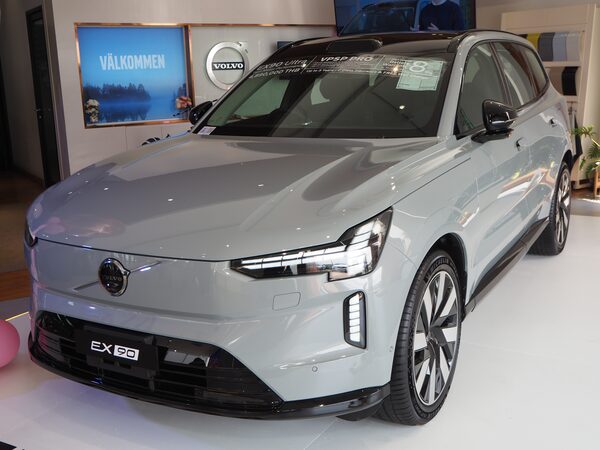
2026 Volvo EX90
From $77,990 USD · 92–106 kWh · Up to 510 hp
Volvo's electric three-row flagship received a major upgrade for 2026: 800V architecture and 350 kW DC charging that adds 155 miles of range in just 10 minutes. LIDAR is standard across all trims, and EPA range reaches 305 miles. Earned Euro NCAP 5-star ratings with 92% adult and 93% child occupant protection scores.
BMW iX3 (Neue Klasse, arrives summer 2026)
BMW's largest platform launch in a decade. The Neue Klasse iX3 delivers 463 hp, up to 400 miles of EPA range, and 400 kW peak DC charging that achieves 10–80% in 21 minutes. Estimated to start around $60,000 USD when it arrives as a 2027 model year vehicle in summer 2026. BMW reported more than 50,000 orders since the September 2025 reveal.
Quick comparison table
A single-view snapshot of starting MSRP, power, efficiency or range, and key recognition across all four SUV tiers covered in this guide. Scroll horizontally on mobile to see the full table.
| Model | Tier | Starting MSRP | Max hp | Efficiency | Recognition |
|---|---|---|---|---|---|
| Toyota RAV4 | Compact | $33,350 | 324 | 47 mpg | KBB Best Buy 2026 |
| Honda CR-V Hybrid | Compact | $35,630 | 204 | 37 mpg | C&D 10Best 2026 |
| Hyundai Tucson PHEV | Compact | $40,000 | 268 | 32 mi EV | IIHS TSP+ |
| Chevrolet Equinox EV | Compact | $36,795 | 300 | 319 mi | Value EV pick |
| Hyundai Palisade Hybrid | Mid-size | $38,000+ | ~260 | ~30 mpg | KBB + C&D 10Best |
| Toyota Grand Highlander | Mid-size | $42,500 | 362 | 36 mpg | Hybrid MAX |
| Kia EV9 | Mid-size EV | $54,900 | 379 | 305 mi | Best 3-Row EV |
| Hyundai Ioniq 9 | Mid-size EV | $60,555 | 422 | 335 mi | New for 2026 |
| Chevrolet Tahoe | Full-size | $62,995 | 420 | 23 mpg diesel | Super Cruise |
| Volvo EX90 | Premium EV | $77,990 | 510 | 305 mi | IIHS TSP+ · Euro NCAP 5★ |
| Lucid Gravity | Premium EV | $79,900 | 828 | 450 mi | World Luxury Car 2026 |
How to choose the right SUV for you
SUV marketing loves to emphasize capability numbers — horsepower, towing, 0–60 times — but most buyers never use that capacity. The meaningful decision framework is usually simpler.
Start with three questions
How many people and how often? If you genuinely need three rows more than a few times a year, the mid-size tier is your floor. Five seats is plenty for most families, and a compact SUV with a fold-flat rear row accommodates most edge-case cargo needs without the penalty of a bigger footprint to park and fuel.
How far is your daily commute? Under 40 miles a day with home charging capability makes an EV the most cost-effective choice by year three. Longer commutes, frequent road trips, or no home charging push you toward a hybrid — which still beats gas-only on operating cost by a meaningful margin.
How long will you keep it? If you plan to trade in after three years, depreciation matters more than fuel savings. Pickups and Toyota hybrids currently lead resale performance; electric SUVs from most brands depreciate approximately 15 percentage points faster than the industry average.
The total cost picture
Purchase price is only part of the five-year ownership cost. Expect to add approximately $15,000–$25,000 in fuel (ICE) or $5,000–$8,000 in electricity (EV), $4,000–$7,000 in maintenance, $4,000–$10,000 in insurance, and the largest single expense — depreciation — which typically totals 40–55% of your original purchase price.
EVs generally cost more up front but significantly less to run. A Chevrolet Equinox EV costs roughly $5–6 in electricity for every 100 miles driven on home rates. A Toyota RAV4 Hybrid costs roughly $9 for the same distance at 2026 US fuel prices. A RAV4 gas-only model costs about $13. Over 15,000 miles a year and five years of ownership, that difference compounds to $3,000–$6,000 in real money.
Frequently asked questions
For mainstream buyers, the 2026 Toyota RAV4 ($33,350) is the safest default choice — it offers class-leading 47 mpg combined fuel economy, strong resale value, and Toyota's long-term reliability reputation. For home-charging households, the Chevrolet Equinox EV ($36,795) delivers 319 miles of real-world range at a mainstream price. For three-row families, the Hyundai Palisade Hybrid is the top pick.
Yes, in almost every scenario. The typical hybrid premium is $1,500–$3,000, and the fuel savings over five years of average driving (approximately 75,000 miles) recoup that difference comfortably — usually within 24 to 36 months. Hybrids also ranked as the most reliable powertrain in JD Power's 2025 Vehicle Dependability Study, and they retain resale value better than gas-only equivalents in every segment.
Modern electric SUV batteries are designed to outlast the rest of the vehicle. Industry standard warranty is 8 years or 100,000 miles, guaranteeing 70% capacity retention. Hyundai and Kia extend that to 10 years, Rivian covers up to 175,000 miles, and Mercedes covers the EQS battery for 10 years or 155,000 miles. Real-world data from high-mileage fleet EVs suggests most batteries retain more than 85% of original capacity after 100,000 miles of use.
The technical distinction is platform: traditional SUVs use body-on-frame truck platforms (Toyota 4Runner, Jeep Wrangler, Chevrolet Tahoe), while crossovers use unibody car platforms (Toyota RAV4, Honda CR-V, Hyundai Tucson). Crossovers ride smoother, achieve better fuel economy, and handle more like cars. True body-on-frame SUVs tow more, handle off-road terrain better, and last longer under hard use — but drink more fuel in daily driving. Nearly every modern compact and mid-size "SUV" is technically a crossover.
Overall new-vehicle transaction prices remain elevated — they crossed $50,000 on average in the US for the first time in September 2025. However, manufacturer incentives have increased significantly on slower-moving electric SUV inventory. Hyundai has reduced Ioniq 5 MSRPs by up to $9,800, and several brands offer $5,000–$10,000 discounts on 2026 electric SUVs. Dealer discounts of 3–5% on gas and hybrid models are typical; EV discounts can reach 10% or more on aging inventory.
For 2026, the IIHS Top Safety Pick+ list includes the Hyundai Tucson, Kia Sportage, Mazda CX-5, Honda CR-V, Subaru Forester, Hyundai Santa Fe, Hyundai Palisade, Subaru Ascent, Honda Passport, Hyundai Ioniq 5, Ioniq 9, Polestar 3, and Volvo EX90. Euro NCAP's 2025 Best Small SUV was the Tesla Model Y (91% adult, 93% child protection). The ANCAP safest car of 2025 was also the Tesla Model Y, with a 91.0% weighted score.
Most drivers do not. AWD adds approximately $1,500–$2,500 to the purchase price, reduces fuel economy by 2–3 mpg, and adds maintenance complexity — but only provides meaningful benefit in regular snow, mud, or off-road conditions. If you live in a climate with occasional light snow, a front-wheel-drive SUV with good winter tires outperforms an AWD vehicle with all-season tires. AWD makes genuine sense if you drive regularly in serious snow regions, on unpaved roads, or need to tow frequently in variable weather.
The 2026 SUV market offers more credible options than any year prior. Identify your actual use case first — passenger count, daily miles, ownership horizon — then let the drivetrain and segment fall out of those answers. Shop the out-the-door transaction price, not the MSRP, and get financing pre-approval from a credit union before visiting any dealer.