
The 2026 sedan market in one minute
Sedans and hatchbacks are the segment everyone keeps writing an obituary for. SUVs and crossovers now take roughly 61% of Australian new-car sales and the majority of US, UK, and Canadian volume. Yet the three-box body still accounts for tens of millions of annual global sales, and the 2026 lineup is the strongest in years — precisely because the weak players have already been culled.
First, hybrids won the year in sedans decisively. Toyota made the Camry hybrid-only. Honda expanded Civic and Accord Hybrid volume. Hyundai, Kia, and Honda now deliver 48–51 mpg combined in midsize packaging — numbers that a Prius set a generation ago. Seven of the ten most fuel-efficient non-plug-in cars in America in 2026 are sedans or sedan-sized hatchbacks. The segment is contracting in volume but ascending in efficiency.
Second, the survivors defected to electrification rather than losing ground to SUVs. The Mercedes-Benz CLA switched to a dedicated electric architecture, the Hyundai Ioniq 6 posts segment-leading 361 miles of EPA range, and the Tesla Model 3 remains a global volume leader. Buyers who want a sedan body in 2026 are increasingly buying an EV — the packaging advantages (lower center of gravity, superior aerodynamics) favor the format.
Third, the compact-car floor is holding. Honda Civic and Toyota Corolla are both 11-time Kelley Blue Book Best Buy winners and together move more than half a million US units a year before you count their hatchback and global variants. Kia's new K4 arrives to replace the Forte with dramatically better styling and a 190-hp turbo option. The bottom of the sedan market is alive — it's the mid-$40k traditional mid-size tier that has actually thinned.
For mainstream buyers, the 2026 Toyota Camry ($30,495, hybrid-only, up to 51 mpg) is the default best answer. For compact commuters, the Honda Civic Hybrid ($30,590, 200 hp, 49 mpg) and Toyota Corolla Hybrid ($25,970, 50 mpg, optional AWD) trade the top two slots. For enthusiasts, the VW Golf R (328 hp, 4.1s 0–60) won MotorTrend Car of the Year 2026. For EV buyers, the Hyundai Ioniq 6 ($37,850, 361 mi range) delivers the best range-per-dollar in the segment.
Best 2026 compact cars and hatchbacks
Compact cars are where the sedan segment remains genuinely healthy. These are the entry-level passenger cars priced roughly $22,000–$32,000 USD (£19k–£28k UK; A$25k–A$38k Australia), delivering 35–50 mpg, comfortably seating four adults, and parking in any city. The 2026 lineup is defined by two Japanese perennials, one bold Korean redesign, and the undisputed hot-hatch king.
The Civic and Corolla alone have earned Kelley Blue Book's Best Buy Compact Car award eleven times each. They set the benchmark for long-term ownership economics, resale value, and reliability. Kia's all-new K4 and Volkswagen's refreshed Golf bring the segment's design ceiling higher than it has been in a decade.
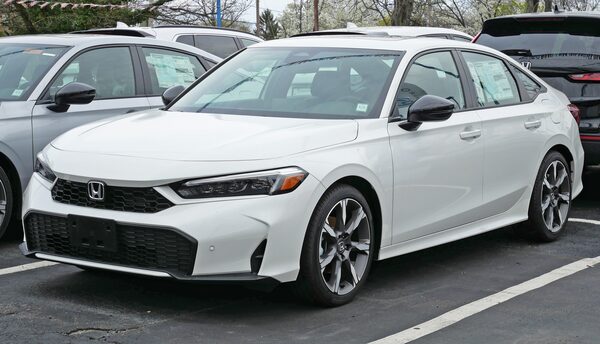
2026 Honda Civic / Civic Hybrid
LX $25,890 · Sport Hybrid sedan $30,590 · Type R $46,000
The 11-time KBB Best Buy winner gets its Sport Hybrid treatment as the volume pick. The two-motor 2.0L hybrid produces 200 hp and returns 49 mpg combined, while hitting 0–60 in roughly 6.1 seconds — Si-like performance with Prius-like efficiency. Honda Sensing is standard across the range, the 9-inch touchscreen is new for 2026, and Google Built-in arrives on upper trims. The Type R remains the only mainstream front-drive car delivering a genuine 4.9-second 0–60.
Who should buy it
Value-focused commuters who want one of the most refined chassis in the compact class paired with hybrid frugality. The Civic Hybrid is the best all-round compact car on sale in 2026 — it drives better than a Corolla, returns essentially the same fuel economy, and costs only slightly more. Skip the LX gas model and go straight to the Sport Hybrid trim.
- 49 mpg hybrid combined
- Best-in-class chassis and steering feel
- KBB Best Buy 11 years running
- Type R variant for enthusiasts
- Honda Sensing standard
- Hybrid premium pushes price past $30k
- Rear headroom tight for adults over 6 ft
- No AWD option
- Interior materials behind Mazda 3
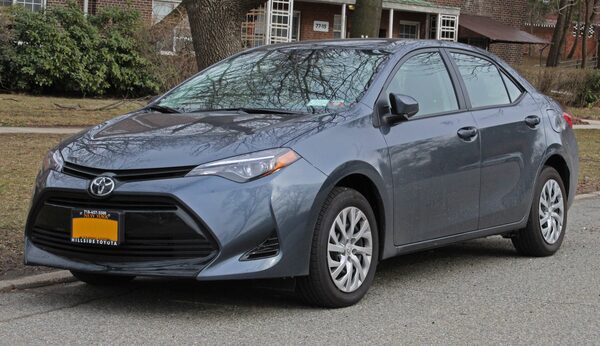
2026 Toyota Corolla / Corolla Hybrid
Gas from $24,100 · Hybrid from $25,970 (incl. dest.) · AWD optional
The world's best-selling nameplate keeps doing what it does best. The hybrid delivers 138 hp and up to 50 mpg combined, and crucially it is the only compact hybrid sedan on sale in North America with an optional all-wheel-drive system. Gas versions make 169 hp. For 2026, blind-spot monitoring becomes standard and Toyota Safety Sense 3.0 adds proactive driving assist. Boring? Yes. Reliable and cheap to own? Also yes.
Who should buy it
Cost-sensitive commuters who want the lowest total cost of ownership in the segment, and anyone in the snow belt who wants a hybrid sedan with all-wheel drive. The Corolla is less engaging than the Civic but also cheaper to buy, cheaper to insure, and legendary on resale. It is the safest financial pick in the compact segment.
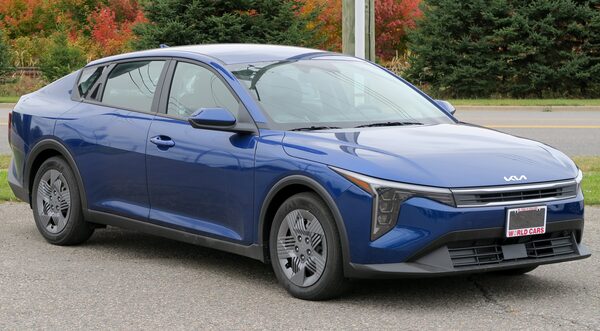
2026 Kia K4 / K4 Hatchback
Sedan from ~$23,000 · Hatch +$1,500 · GT-Line turbo available
Kia's all-new replacement for the Forte is the boldest-looking car in the compact class, with a jewel-like front fascia and the option of dual 12.3-inch screens in GT-Line trim. Choose 147 hp from the 2.0L naturally aspirated engine or step up to the 190-hp 1.6T. Hyundai-Kia's 10-year/100,000-mile powertrain warranty remains the longest in the category, and HDA2 lane-centering is available — rare at this price.
Who should buy it
Compact buyers who refuse to drive a generic-looking econobox and who value the industry's best powertrain warranty. The K4 does not offer a hybrid option in 2026 — a meaningful gap against Civic and Corolla — but its turbocharged 1.6T variant meaningfully out-accelerates both base rivals, and its interior presentation is class-leading for the money.
Seven of the ten most fuel-efficient non-plug-in cars on sale in America in 2026 are sedans or sedan-sized hatchbacks — a category the industry keeps declaring dead.
Honorable mention in the compact class: Mazda 3
The Mazda 3 (sedan or hatch, from roughly $26,000) remains the driver's choice in the segment, with the best interior materials short of an Audi A3. Mazda also continues to offer its 250-hp turbocharged 2.5 engine with standard all-wheel drive on top trims — a unique proposition. The trade-off is firmer ride, smaller back seat, and no hybrid option yet, so it sits alongside the Civic, Corolla, and K4 rather than ahead of them.
Best 2026 mid-size sedans
Mid-size sedans are where the segment contracted the hardest — Ford Fusion, Chevrolet Malibu, Volkswagen Passat, Hyundai Sonata (US), Mazda 6, and Subaru Legacy have all exited or are exiting the North American market in recent years. What remains are the two Japanese pillars. Both are now hybrid-first propositions, and both are substantially better cars than their departed rivals ever were.
Typical pricing runs $29,000–$38,000 USD (£23k–£30k UK; A$45k–A$59k Australia) for mainstream mid-size; the premium German tier starts around $46,000 and goes well past $100,000. There is no longer a meaningful $35,000 mid-size sedan tier below the Camry and Accord — it has been absorbed by the compact SUV segment.
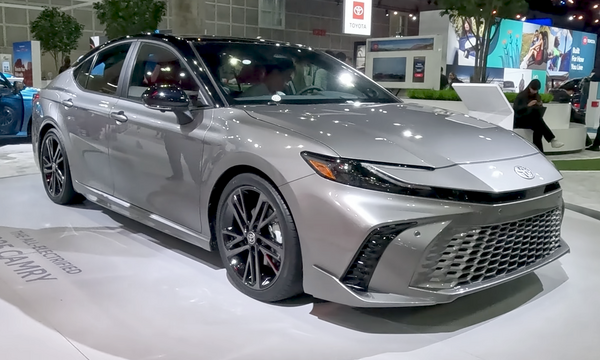
2026 Toyota Camry (hybrid-only)
LE $30,495 USD (incl. $1,195 dest.) · AWD +$1,525 · Up to 51 mpg combined
The ninth-generation Camry is sold exclusively as a hybrid — Toyota's clearest signal that the mainstream midsize sedan is now an electrified category. The hybrid powertrain produces 225 hp (FWD) or 232 hp (AWD), returns up to 52/49/51 mpg, and includes dual 12.3-inch displays standard with Proactive Drive Assist. Five-year total cost of ownership lands at roughly $36,000–$50,000 depending on trim — among the lowest of any sedan on the market.
Who should buy it
Practical midsize sedan shoppers who prioritize class-leading fuel economy, bulletproof reliability, and the best resale value in the segment. The Camry is the Toyota RAV4 of sedans — you will almost never regret buying one. Pick the XLE or XSE for the full interior-tech suite; the LE is a fleet car in all but name.
- Up to 51 mpg combined
- Hybrid-only powertrain standard
- Optional AWD (rare in segment)
- Strongest sedan resale in 2026
- 12.3-inch dual displays standard
- No gas-only trim for budget buyers
- Entry price up vs. pre-hybrid 2024
- Ride less engaging than Accord
- Rear seat smaller than previous gen
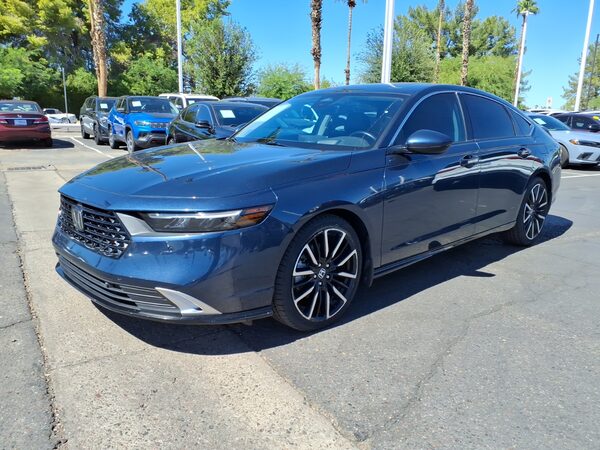
2026 Honda Accord
LX $28,395 · Sport Hybrid $33,795 · Touring Hybrid ~$40,000
Honda keeps the gas option for now — the 1.5T makes 192 hp — but the volume pick is the 2.0L two-motor hybrid at 204 hp with 51/44/48 mpg. For 2026 the Accord receives a larger 9-inch touchscreen with wireless Apple CarPlay and Android Auto standard across the lineup. Back seat and trunk remain the largest in the segment, and the chassis is the most entertaining mainstream sedan you can buy.
Who should buy it
Midsize sedan buyers who want a little more space, a little more driver engagement, and a little less Toyota than the Camry offers. The Accord is a genuine 10Best winner for good reason — the Sport Hybrid trim at $33,795 is one of the best value propositions in the entire US new-car market. Skip the gas-only LX unless budget forces your hand.
BMW 3 Series: the enthusiast midsize
The 2026 BMW 3 Series remains the benchmark for sport-sedan dynamics. Pricing starts around $46,000 USD for the 330i and climbs to roughly $59,000 for the M340i, with gas, mild-hybrid, and plug-in-hybrid powertrains available depending on market. Standard equipment in 2026 includes iDrive 8.5 and native access to the Tesla Supercharger network from spring 2026 — a meaningful convenience upgrade for BMW buyers who previously had to adapter-juggle. Resale is strong, running costs are high, and the driving experience remains worth the premium for the buyer who actually cares.
Best 2026 performance sedans and hot hatches
If mainstream sedans are contracting, the enthusiast tier has actually consolidated — the cars that still matter are the cars that earned their place. Four 2026 models carry the flag for the driver-focused sedan and hatch segment, across a price band from $34,590 to roughly $60,000 USD.
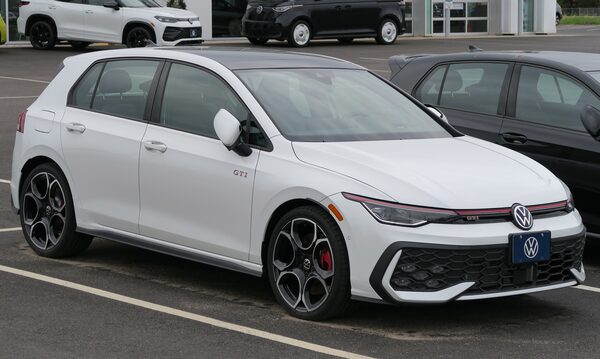
2026 Volkswagen Golf GTI / Golf R
GTI from $34,590 · Golf R $49,455–$50,730
The hot-hatch benchmark earned MotorTrend's Car of the Year award for the 2026 refresh. The GTI uses a 2.0T making 241 hp through a 7-speed DSG (the manual is gone) and hits 0–60 in 5.8 seconds. The Golf R steps up to 328 hp, 4.1-second 0–60, and a 12.6-second quarter mile at 110.6 mph with 4Motion all-wheel drive standard. New for 2026: illuminated grille, 12.9-inch touchscreen, and physical steering-wheel buttons that replace the unloved capacitive touch controls.
Who should buy it
Hot-hatch enthusiasts who want a genuinely versatile daily driver with a usable rear seat and a real cargo area. The GTI is the sensible choice, the Golf R is the giant-killer. Both are now dual-clutch-only in North America — mourn the manual elsewhere.
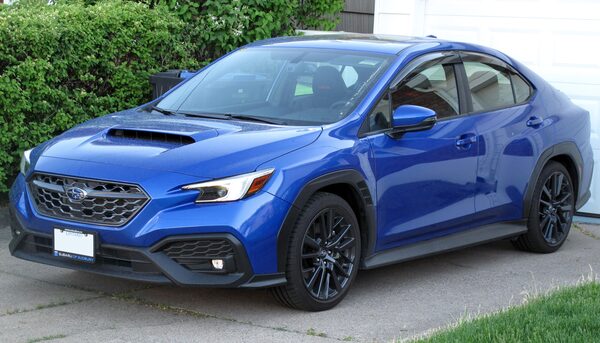
2026 Subaru WRX
From ~$38,920 (2025 reference) · 2026 pricing TBD
The only remaining mainstream AWD performance sedan under $50,000. Subaru's 2.4-liter turbocharged boxer makes 271 hp and 258 lb-ft, available with either a traditional 6-speed manual or the Subaru Performance Transmission. 0–60 arrives in roughly 5.5 seconds, and symmetrical all-wheel drive is standard on every trim. Subaru has confirmed there will be no STI variant for this generation — the WRX is now the top of the performance-sedan lineup.
Who should buy it
Rally-inspired enthusiasts in snow-belt states or anyone who wants a real manual transmission in a four-door. The WRX is the last of its kind — a practical sedan with standard all-wheel drive and an available stick shift at a mainstream price point. Trade-offs are a firm ride and fuel economy in the low-20-mpg range.
BMW M340i and Audi S4: the premium step up
Above the Golf R and WRX sits the premium-German tier. The BMW M340i (~$59,000) delivers 382 hp, 4.1-second 0–60 acceleration, and all-wheel drive with far more interior refinement than either enthusiast alternative. The Audi S4 and Mercedes-AMG C 43 inhabit a similar bracket. These are the right answer for the buyer who wants a genuine performance sedan but also uses it as a business car five days a week.
Best 2026 electric sedans
Electric sedans are the segment's quiet renaissance. While the midsize gas-sedan market has contracted, the electric-sedan tier has actually expanded — because low drag, smooth ride, and flat floors all favor a three-box shape. Tesla still sells the Model 3 in volume, but for 2026 the two most interesting new answers are the Mercedes CLA (now fully electric) and the Hyundai Ioniq 6 (segment range leader).
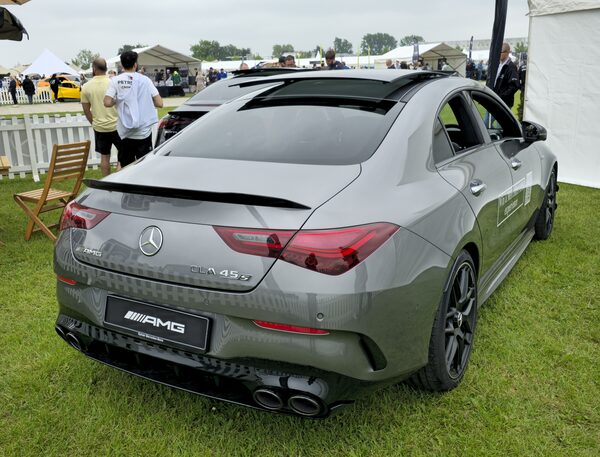
2026 Mercedes-Benz CLA (electric)
CLA 250+ from $47,250 USD (incl. dest.) · 85 kWh · 374 mi EPA est.
The third-generation CLA moves to Mercedes' new electric-native MMA platform with an 800-volt architecture, 268 hp, and an estimated 374 miles of EPA range. 320 kW DC fast charging takes the battery from 10–80% in just 22 minutes. The cabin debuts the fourth-generation MBUX Superscreen with both ChatGPT and Google Gemini integration. Euro NCAP named it the 2025 Overall Best Performer with 94% adult occupant protection — the highest score in its test year.
Who should buy it
Entry-premium buyers cross-shopping the Tesla Model 3 who want Mercedes badge, traditional luxury interior quality, and the class-leading 2025 Euro NCAP safety score. The CLA is roughly $5,000 more than a Model 3 Long Range but brings meaningfully more interior refinement and meaningfully better after-sales service.
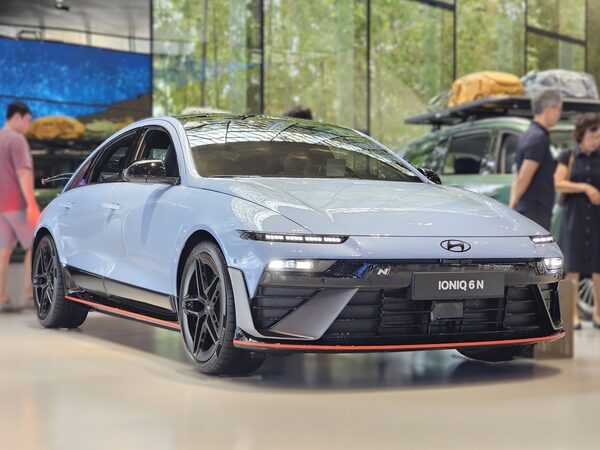
2026 Hyundai Ioniq 6
From $37,850 USD · SE Long Range RWD · New Ioniq 6 N (641 hp)
Hyundai's streamlined electric sedan posts a 361-mile EPA range in SE Long Range RWD trim — the highest figure in the segment under $45,000, and a direct result of its class-leading 0.21 drag coefficient. Output spans 149 hp on the base RWD to 320 hp on the AWD Limited. New for 2026 is the Ioniq 6 N halo variant producing 641 hp and bringing the Ioniq 5 N's synthetic-shift playbook to the sedan body. 800V architecture enables 10–80% charging in roughly 18 minutes.
Who should buy it
Value-minded EV buyers who want the most range per dollar in the electric-sedan segment. The Ioniq 6 lands at $37,850 before any manufacturer or state incentives — Hyundai has been among the most aggressive discounters of 2026 as federal US tax credits expired, with Ioniq 5 MSRPs cut by up to $9,800. Expect similar transaction-price flexibility on 6.
Tesla Model 3 and Lucid Air: the bookends
The Tesla Model 3 remains the global volume leader in electric sedans and the vehicle that defined the category. The Lucid Air sits at the opposite extreme: Pure from $72,400, Touring from $79,900, and Grand Touring at $114,900 with a class-record 512 miles of EPA range. The Sapphire trim at $250,500 produces 1,234 horsepower and a 1.9-second 0–60 — the current benchmark for production EV performance. Car and Driver named the Air a 10Best winner for 2026.
Fuel economy rankings and resale value
Seven of the top ten most fuel-efficient non-plug-in cars sold in America in 2026 are sedans or sedan-body hatchbacks. The Toyota Camry LE Hybrid posts 53/50/51 mpg, the Corolla Hybrid LE 53/46/50, Civic Hybrid 50/47/49, and Accord Hybrid EX-L 51/44/48. Real-world delta between EPA rating and observed fuel economy is now roughly 0–3 mpg in all four cases — a significant improvement on older hybrid generations that often underperformed their stickers.
Sedan resale value in 2026
The iSeeCars 2026 Study of 950,000+ five-year-old sales puts the industry average five-year depreciation at 41.8%, improved from 45.6% in 2025 — except for EVs, which still depreciate roughly 15 percentage points faster than average. Within sedans: Toyota Camry and Honda Accord hybrids are the clear resale leaders (approximately 35–38% five-year depreciation). Civic and Corolla follow closely. Electric sedans from most brands trail significantly on resale.
One structural correction: Toyota hybrids transformed from depreciation laggards in 2019 (56.7% five-year loss) to segment leaders in 2026 (35.4% segment average). Rising fuel prices and the hybrid-reliability narrative fundamentally reshaped used-car demand. If you plan to trade in at three or five years, buy a mainstream Japanese hybrid sedan — the math is close to incontestable.
Trim-level recommendations
Camry: Skip the LE, go XLE or XSE for dual 12.3-inch displays and ventilated seats. Accord: Sport Hybrid is the value sweet spot — Touring Hybrid adds leather and 19-inch wheels for roughly $6,000 more that most buyers do not need. Civic Hybrid: Sport trim undercuts Sport Touring by ~$2,800 while keeping the full Honda Sensing suite. Corolla Hybrid: LE AWD is the uniquely-positioned pick — no other compact hybrid sedan offers it. Golf GTI: SE trim is the pragmatic pick; Autobahn adds adaptive dampers for serious drivers. Golf R: one trim only. Ioniq 6: SE Long Range RWD delivers the most range per dollar — skip AWD unless you need it. CLA: 250+ base trim is well-equipped; the premium package is the only upgrade worth considering.
Quick comparison table
A single-view snapshot of starting MSRP, power, efficiency, and key recognition across the twelve sedans and hatchbacks covered in this guide. Scroll horizontally on mobile to see the full table.
| Model | Segment | Starting MSRP | Power | Efficiency / Range | Recognition |
|---|---|---|---|---|---|
| Honda Civic Hybrid | Compact | $30,590 | 200 hp | 49 mpg | KBB + C&D 10Best |
| Toyota Corolla Hybrid | Compact | $25,970 | 138 hp | 50 mpg | Only AWD compact hybrid |
| Kia K4 (1.6T) | Compact | $23,000+ | 190 hp | ~32 mpg | IIHS TSP+ |
| VW Golf GTI | Hot hatch | $34,590 | 241 hp | 5.8s 0–60 | MotorTrend COTY 2026 |
| VW Golf R | Hot hatch | $49,455 | 328 hp | 4.1s 0–60 | MotorTrend COTY 2026 |
| Subaru WRX | Performance | $38,920+ | 271 hp | 5.5s 0–60 | AWD + 6MT |
| Toyota Camry Hybrid | Mid-size | $30,495 | 232 hp | 51 mpg | KBB Best Buy 2026 |
| Honda Accord Hybrid | Mid-size | $33,795 | 204 hp | 48 mpg | C&D 10Best 2026 |
| BMW 3 Series (330i) | Premium | $46,000 | 255 hp | Sport benchmark | Supercharger 2026 |
| Hyundai Ioniq 6 | Electric | $37,850 | 149–320 hp | 361 mi | Range leader sub-$45k |
| Mercedes CLA 250+ | Electric | $47,250 | 268 hp | 374 mi (est) | Euro NCAP best 2025 |
| Honda Civic Type R | Performance | $46,000 | 315 hp | 4.9s 0–60 | Best FWD on sale |
How to choose the right sedan for you
Sedan marketing in 2026 spans a wider band than any time in the last decade — $24,000 hybrid commuters sharing a category with $250,000 Lucid Sapphires. A simple decision framework keeps most buyers out of the weeds.
The three-question framework
Do you actually need a sedan, or are you defaulting to one? If you regularly carry bulky cargo, bikes, strollers, or flat-pack furniture, a compact SUV almost always serves you better. Sedans are the right answer when you prioritize highway fuel economy, quiet cruising, and a lower center of gravity — commuters, road-trip buyers, and anyone who values how a car actually drives. If you rarely use your cargo area fully, the aerodynamic efficiency penalty of an SUV is a steady tax on every mile you drive.
How many miles do you drive per year, and where do you park? Under 12,000 miles a year in a city with home charging pushes you toward an Ioniq 6 or CLA — the math works fast. Over 15,000 miles annually or frequent road trips without charging infrastructure pushes you toward a Camry or Accord hybrid. Hybrids beat both gas-only and EV on total five-year cost for high-mileage drivers without home chargers.
How long will you keep the car? If you plan to trade in within three years, depreciation is your largest single cost — Toyota and Honda hybrids lead, EVs from most brands lag. If you keep cars eight years or more, upfront price matters more and reliability matters most; the Camry, Accord, Civic, and Corolla hybrids have unmatched long-term dependability records. If you lease, EVs often make the most sense — you shield yourself from their steeper depreciation curve while getting the operating-cost benefits.
Which sedans remain competitive vs. defecting to SUVs
Four 2026 sedans genuinely out-compete their SUV siblings on pure value: the Camry Hybrid vs. a RAV4 Hybrid (same brand, roughly $3,000 less, 4 mpg better), the Accord Hybrid vs. CR-V Hybrid (similar delta), the Civic Hybrid vs. any $32,000+ compact SUV (12+ mpg advantage), and the Ioniq 6 vs. Ioniq 5 (40+ miles more EPA range for roughly the same money). Four more — the Corolla, K4, Golf GTI/R, and WRX — fill roles that have no direct SUV analogue at the same price. The remaining models (BMW 3 Series, CLA Electric) sell on brand and driving experience rather than packaging.
The total cost picture
Purchase price is only part of the five-year ownership story. Typical sedan five-year TCO breakdown: fuel $8,000–$12,000 (gas), $5,000–$7,500 (hybrid), or $3,500–$5,500 (EV at home rates); insurance $4,500–$8,000; maintenance $3,000–$5,500; depreciation 35–55% of purchase price depending on brand and powertrain. A Toyota Camry Hybrid at $30,495 purchase runs roughly $36,000–$50,000 all-in for five years; a Tesla Model Y as a cross-shop runs $50,000–$60,000 all-in. The sedan advantage on total cost is real.
Operating cost per 100 miles at 2026 US prices: Civic Hybrid roughly $7.30, Camry Hybrid $7.10, Ioniq 6 (home charging) $5.40, Golf R $16.50, BMW 3 Series gas approximately $14. Over 15,000 miles a year for five years, the gap between a Camry Hybrid and a Golf R compounds to roughly $7,000 in fuel alone — before maintenance, insurance, or depreciation differences.
Frequently asked questions
Sedans are contracting in US and UK market share but are not disappearing. Toyota, Honda, Hyundai, Kia, BMW, Mercedes, and Volkswagen have all recommitted to sedan platforms for 2026 and beyond. What disappeared is the mid-tier American mid-size sedan (Ford Fusion, Chevy Malibu, VW Passat US) and several weaker imports. The remaining Japanese, Korean, and German options are stronger than ever, with hybrid powertrains and electric platforms keeping the format relevant. Globally, sedans still move tens of millions of units annually.
For mainstream midsize buyers, the 2026 Toyota Camry ($30,495, hybrid-only, up to 51 mpg combined) is the default best answer — class-leading fuel economy, optional AWD, the strongest resale in the segment, and KBB Best Buy Midsize Car 2026. For compact buyers, the Honda Civic Hybrid ($30,590) and Toyota Corolla Hybrid ($25,970) trade the top two slots. For EV buyers, the Hyundai Ioniq 6 ($37,850) leads on range per dollar.
Toyota eliminated the gas-only Camry for the ninth generation because hybrid sales had already reached roughly 60–70% of Camry volume in the final pre-redesign years. Consolidating to a single hybrid powertrain lowers manufacturing complexity, improves corporate fleet fuel economy compliance in every market, and responds directly to rising fuel prices. The hybrid premium is gone because there is no gas-only baseline to compare against — the $30,495 entry price is competitive against the outgoing 2024 gas LE at $27,215.
The IIHS 2026 Top Safety Pick+ list in the sedan category includes the Honda Civic, Kia K4, Mazda 3, and Nissan Sentra (small cars) and the Toyota Camry, Honda Accord, and Hyundai Sonata (midsize). Euro NCAP's 2025 Overall Best Performer across all segments was the Mercedes-Benz CLA (94% adult, 89% child, 93% vulnerable road user, 85% safety assist). The Tesla Model 3 was named Euro NCAP Best Large Family Car 2025.
Yes, in almost every case. The typical hybrid premium runs $1,500–$3,000 over the equivalent gas-only trim, and the fuel savings over five years of average driving (roughly 75,000 miles) recoup that difference within 24–36 months. Hybrids were also ranked as the most reliable powertrain in JD Power's 2025 Vehicle Dependability Study, and they now retain resale value better than gas-only equivalents — the iSeeCars 2026 study put hybrid five-year depreciation at 35.4% versus 41.8% industry average.
Buy an EV if you have home charging, drive under 200 miles per round trip most of the time, and plan to keep the car two to six years or lease. An Ioniq 6 at $37,850 with home charging costs roughly $5.40 per 100 miles, half the cost of a hybrid. Buy a hybrid if you lack home charging, drive frequent long distances, or plan to keep the car eight years or more — depreciation risk on EVs from most brands remains 15 percentage points above average. The US federal EV tax credit ended September 30, 2025, but manufacturer incentives have partially offset that; Hyundai cut Ioniq 5 MSRPs by up to $9,800.
Among non-plug-in sedans, the Toyota Camry LE Hybrid posts 53/50/51 mpg combined, the Toyota Corolla Hybrid LE returns 53/46/50, the Honda Civic Hybrid achieves 50/47/49, and the Honda Accord Hybrid EX-L hits 51/44/48. The Hyundai Elantra Hybrid Blue leads all sedan trims at 53/58/54 combined, second only to the Prius Eco across the entire US lineup. All five are meaningfully more efficient than any comparable compact SUV hybrid.
The Toyota Camry Hybrid and Honda Accord Hybrid are the clear resale leaders in mainstream sedans, both tracking at roughly 35–38% five-year depreciation — well below the 41.8% industry average. Honda Civic and Toyota Corolla follow closely. Premium sedans: BMW M340i and Mercedes C 43 hold value better than the base 330i and C 300. Electric sedans from most brands depreciate approximately 15 percentage points faster than average; Tesla Model 3 and Model S are relatively strong exceptions within the EV tier. Toyota as a brand has 10 of the top 25 resale slots industry-wide.
The 2026 sedan market is smaller than it used to be but stronger where it survived. Identify your real priority — lowest total cost, driving engagement, EV range, or luxury — and the right answer falls out quickly. The Camry Hybrid, Accord Hybrid, Civic Hybrid, Corolla Hybrid, Ioniq 6, and Golf R cover roughly 90% of buyer intents between them. Shop the out-the-door transaction price, not MSRP, and look for aggressive manufacturer incentives on EVs as 2026 US federal credits have ended.